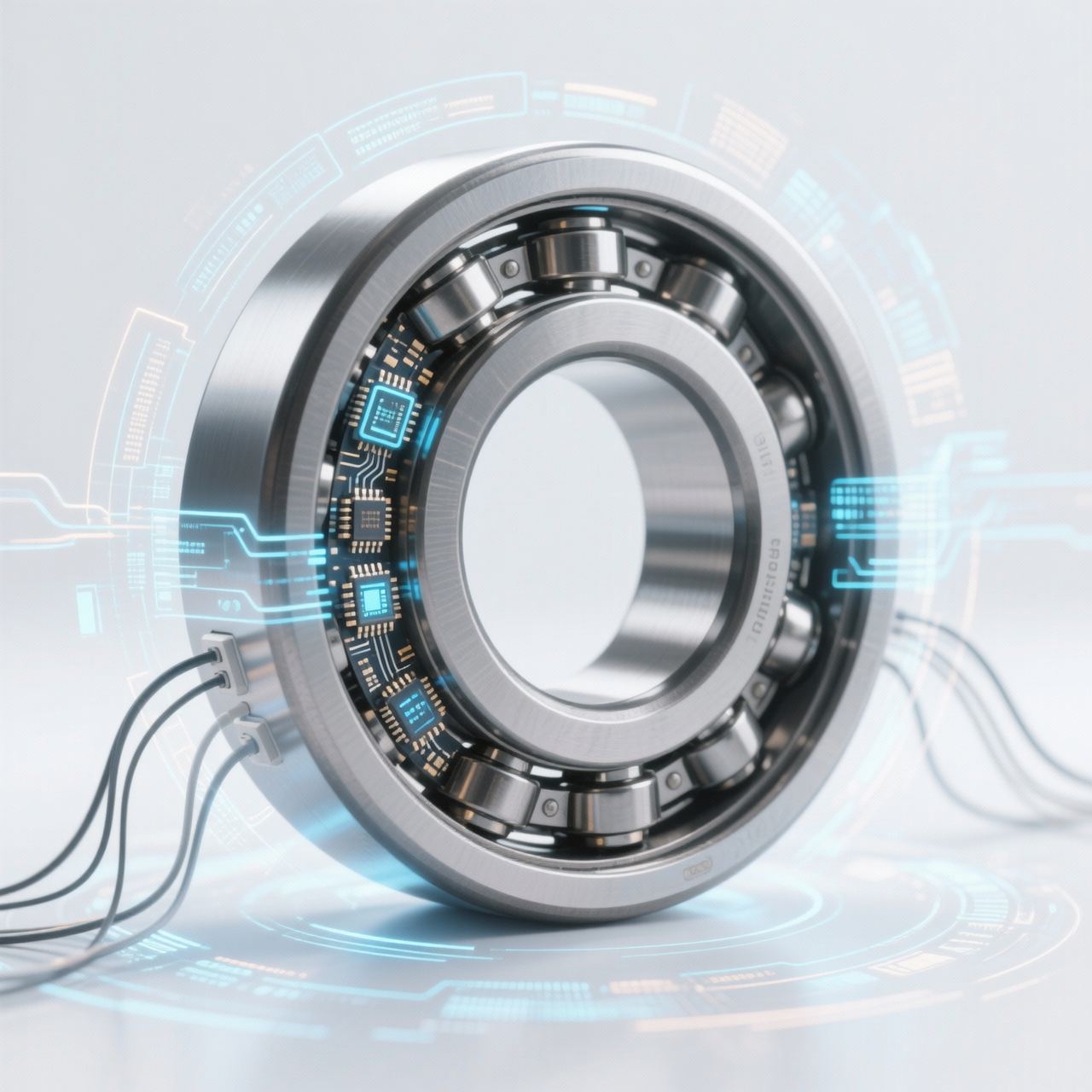
As automobiles evolve towards greater intelligence and connectivity, the value proposition of a vehicle is shifting from traditional hardware-driven to a deep integration of hardware, software, and data. In this transformative wave, automotive bearings—previously relegated to the sidelines and considered purely mechanical components—are undergoing a profound transformation. Industry observers point out that "intelligent bearings," integrating sensing and edge computing capabilities, are poised to become a key source of dynamic data flow in future vehicles, thus deeply participating in the safety, efficiency, and health management of the entire vehicle.
Driven by the demands of intelligent driving and digital fleet management, vehicles require more real-time and refined perception of their own status. Traditional aftermarket sensors or centralized control systems often suffer from limitations such as data lag, complex installation, or high costs when monitoring the state of rotating machinery. Embedding sensing functions directly into bearings—the core carrier of force and motion transmission—offers a native, precise, and efficient solution.
Current technological convergence exhibits three main trends:
Functional Integration: By integrating miniaturized strain gauges, temperature chips, or MEMS (Micro-Electro-Mechanical Systems) sensors into bearing rings or seals, intelligent bearings can directly and in-situ acquire key physical parameters such as load, vibration, temperature, rotational speed, and even lubrication status. This "integrated sensing and transmission" design eliminates additional installation steps and significantly improves data reliability.
Real-Time Diagnostics: With the help of built-in preprocessing chips or by connecting to domain controllers via vehicle networks, intelligent bearings can perform preliminary analysis and feature extraction on the collected data, assess their own health status in real time (such as early spalling or poor lubrication), and provide predictive maintenance warnings. For autonomous driving fleets, this can greatly reduce safety risks and operational disruptions caused by sudden failures of critical rotating components.
System Empowerment: The real-time data stream provided by intelligent bearings has value far exceeding the components themselves. It can provide more accurate wheel dynamics correction information for Advanced Driver Assistance Systems (ADAS); provide input for optimizing torque distribution and energy recovery strategies for electric drive systems; and even provide cloud-based big data analytics platforms with the actual vehicle load spectrum for improving the design of next-generation models.
Industry experts say, "We are witnessing bearings evolve from 'dumb parts' to 'intelligent terminals.' They are no longer merely about mechanical performance; they have become active 'data cells' in the digital twin model of the entire vehicle. This requires traditional bearing manufacturers to engage in unprecedented cross-industry collaborations with partners in semiconductors, algorithm software, and communication protocols."
Despite remaining challenges in reliability, cost control, and data standardization, the development momentum of "intelligent bearings," as one of the key technological paths to achieving comprehensive vehicle perception and digitalization, is irreversible. This transformation will not only reshape the bearing industry's value chain but will also inject new core driving force into the intelligent upgrading of the entire automotive industry.
Related Posts
- ▶ From "Mechanical Components" to "Data Nodes": Redefining Automotive Bearings in the Era of Intelligent Connectivity
- ▶ The Shanghai International Automotive Bearing Technology Forum concluded successfully, jointly outlining a blueprint for collaborative innovation within the industry.
- ▶ Driven by both electrification and intelligentization, China's automotive bearing market is poised to enter a new blue ocean worth hundreds of billions of yuan.
Online Message
Thank you very much for writing to us. Please leave your message and contact information, we will reply to you within 24 hours.